Why Poor Yard Drainage Causes Water Intrusion in San Antonio Homes
Poor yard drainage water intrusion San Antonio homes face after heavy rain starts outside. Here is why it happens, how to spot it, and how to dry out fast.
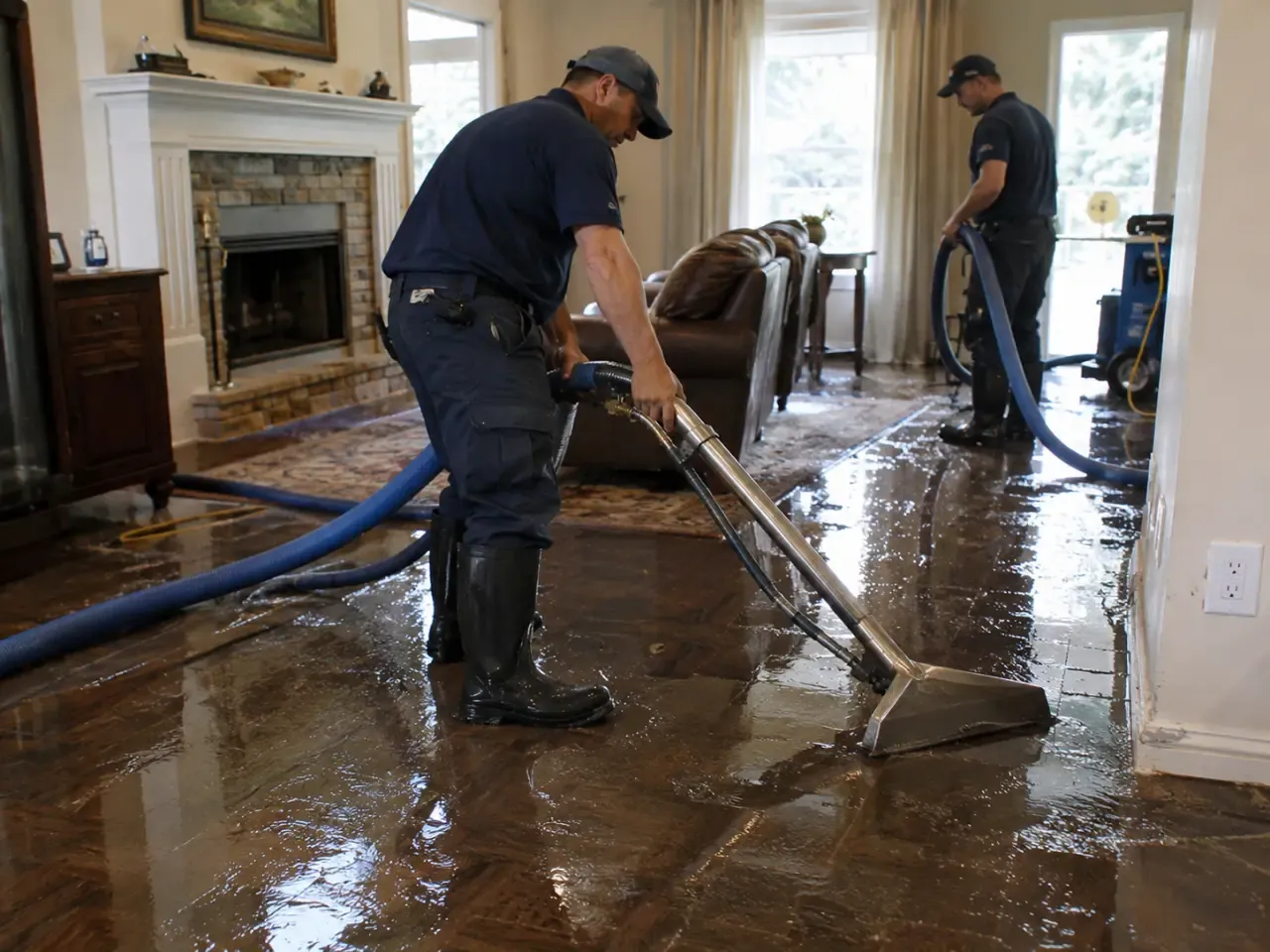
Poor yard drainage water intrusion San Antonio homes experience almost always starts with water that has nowhere to go. When soil is saturated and grading slopes toward the house, rainwater pools against the slab, finds a crack or utility penetration, and wicks inside within hours. The rest of this post explains exactly how that happens in San Antonio's clay soils, how to spot the early signs, and what to do before mold sets in.
We have pumped water out of hundreds of homes across Bexar County, and the pattern is consistent: the problem starts outside, shows up inside, and gets worse every time it rains. Understanding the path water takes is the first step to stopping it.
The Short Answer: Water Follows the Path of Least Resistance
Water intrusion from poor yard drainage happens because water always takes the easiest route downhill, and a San Antonio home's foundation is often the lowest point in the yard. If your lot slopes toward the house, if gutters dump next to the slab, or if the soil has settled into a bowl around the perimeter, every heavy rain pushes water against the foundation instead of away from it.
Once water reaches the slab edge, it does three things: it pools, it soaks into the soil, and it seeks openings. Cracks in the slab, gaps around plumbing penetrations, and the seam where the slab meets the exterior wall are all entry points. From there, capillary action pulls moisture into the concrete and upward into flooring, baseboards, and wall cavities.
This is why we tell homeowners that Water Mitigation San Antonio TX is not just about drying the inside of the house. It is about understanding the outside first. If you fix the wet carpet but not the grading, the next storm puts you right back where you started.
How San Antonio's Soil and Slabs Turn Drainage Problems Into Indoor Water
San Antonio sits on expansive clay soils that swell when wet and shrink when dry, and that movement is brutal on slab foundations. During a wet spring, the clay around your foundation can expand enough to crack the slab or open gaps at the edges. During a dry summer, it shrinks and pulls away, leaving a gap that acts like a funnel the next time it rains.
Most homes here are built on post-tension slabs, which are strong but not waterproof. Water that sits against the slab edge for 24 to 48 hours will find its way in. We have seen water travel 10 to 15 feet horizontally under a slab before surfacing in a bedroom closet.
The other factor is our rainfall pattern. San Antonio averages around 32 inches of rain per year, but it often arrives in short, intense bursts. A single storm can drop 2 to 4 inches in a few hours. That volume overwhelms typical residential drainage, especially in older neighborhoods where the original grading has settled over decades.
We see this constantly in Water Mitigation in Beacon Hill, where 1920s bungalows sit on lots that have shifted and settled for a century. The original French drains are long gone, and the soil now slopes toward the house instead of away from it.
Signs of Water Seepage Near a San Antonio Home Foundation
Signs of water seepage near a San Antonio home foundation usually show up before you see standing water inside. The earliest clues are subtle, and catching them early can save you thousands in repairs.
Here is what we look for during an inspection:
- Musty odor in a room that has no obvious source, especially after rain.
- Dark or discolored baseboards along an exterior wall, particularly at the bottom 2 to 3 inches.
- Bubbling or peeling paint on interior walls near the floor.
- Soft or spongy flooring near exterior doors or along the wall opposite the yard's low point.
- Visible cracks in the slab wider than a credit card, especially near the perimeter.
- Efflorescence - that white, chalky powder on concrete - which means water is moving through the slab and evaporating.
Outside, check for soil that has settled into a trench against the foundation, downspouts that discharge within 3 feet of the house, and any low spot in the yard where water stands for more than a few hours after rain. Those are the conditions that create residential water damage restoration after yard drainage problems.
Why Heavy Rain Can Lead to Water Damage in San Antonio Houses
Heavy rain can lead to water damage in San Antonio houses because the ground is already saturated from previous storms, so new rain has nowhere to infiltrate. When the soil can't absorb more water, the excess runs across the surface and follows the slope of your yard.
If that slope leads to your foundation, you get hydrostatic pressure - water pushing against the slab from the outside. That pressure is relentless. It will exploit any weakness: a hairline crack, a pipe penetration, the joint where the slab meets the wall.
Once inside, water spreads fast. A 1/8-inch gap under a baseboard can soak 20 square feet of drywall in under an hour. Within 24 hours, mold spores that were dormant in the dust begin to colonize wet drywall and insulation. Within 48 hours, you are looking at structural drying and dehumidification, not just a towel and a fan.
We handle these calls every week, and the ones that go well are the ones where the homeowner called within the first day. The ones that go badly are the ones where water sat for a week before anyone noticed.
What to Do When Rainwater Seeps Into Your House
If rainwater seeps into your house, the first priority is to stop the source and start drying within the first 24 hours. Here is the sequence we recommend:
- Find the entry point. Look for the highest wet spot on the wall or floor. Water stains usually show you where it came in.
- Stop the flow if you can. If a downspout is dumping against the house, redirect it. If water is pooling at a door, use towels or sandbags to block it.
- Remove standing water. A wet/dry shop vac works for small amounts. For anything more than a puddle, you need professional Emergency Water Extraction San Antonio TX - we use truck-mounted units that pull hundreds of gallons in minutes.
- Pull up wet carpet and padding. Carpet padding acts like a sponge and will not dry in place. If it is soaked, it has to go.
- Start air movement. Box fans and a dehumidifier help, but they are no substitute for commercial drying equipment. We set up Structural Drying and Dehumidification San Antonio TX with calibrated moisture meters to track progress.
- Document everything. Take photos and video before you move anything. Your insurance adjuster will want them.
If the water came in through a sewer line or floor drain, stop and call us immediately. That is a contaminated water event, and it requires Sewage Backup Cleanup San Antonio TX with proper PPE and antimicrobial treatment.
Common Mistakes Homeowners Make After Yard Drainage Flooding
The most common mistake is drying the visible water and ignoring the hidden moisture. Water wicks into drywall, insulation, and the bottom plate of your wall framing. If you only dry the surface, you leave a breeding ground for mold.
Other mistakes we see:
- Running the AC to dry the house. Your AC removes some humidity, but it cannot dry saturated building materials. It also runs up your electric bill while mold grows.
- Assuming the slab is waterproof. Concrete is porous. Water moves through it.
- Waiting for the insurance adjuster before starting mitigation. Most policies require you to mitigate further damage. Waiting three days for an adjuster can turn a $2,000 drying job into a $15,000 mold remediation.
- Fixing the yard drainage after the fact. Grading, gutters, and French drains are part of the solution, but they do not dry the water already inside.
We see this often in Water Mitigation in Alamo Ranch, where newer homes have landscaping that was installed without regard to the original grading plan. A decorative berm or a raised flower bed can redirect water right into the slab.
When to Call a Professional
Call a professional when water has been inside for more than a few hours, when the affected area is larger than a bathtub, or when you smell that musty, earthy odor that means mold is already growing. Those are the three triggers.
Our team at San Antonio Water Shield handles the entire process: we find the entry point, extract the water, set up commercial drying equipment, and monitor moisture levels until your home is dry. We also document everything for your insurance claim and can recommend trusted drainage contractors to fix the outside problem so it does not happen again.
If you are not sure whether you need help, call us anyway. We would rather tell you it is a minor issue than have you find mold three weeks from now.
Frequently Asked Questions
Can poor yard drainage cause water to enter a San Antonio home?
Yes. When soil slopes toward the foundation or downspouts discharge too close to the house, rainwater pools against the slab and finds cracks or utility penetrations. In San Antonio's clay soil, that water can travel horizontally under the slab and surface inside within 24 hours.
What should I do if rainwater seeps into my house in San Antonio?
Stop the source if possible, remove standing water, and start drying within 24 hours. Pull up wet carpet padding, run fans and a dehumidifier, and call a water mitigation company if the area is larger than a few square feet or if you smell mold.
Does water mitigation remove moisture caused by drainage problems?
Yes. Water mitigation removes standing water and uses commercial dehumidifiers and air movers to dry building materials to safe moisture levels. We use moisture meters to confirm the structure is dry, not just the surface.
How can I spot water intrusion near my home's foundation?
Look for musty odors, dark baseboards, bubbling paint, soft flooring near exterior walls, and white chalky efflorescence on the slab. Outside, check for soil that has settled against the foundation and downspouts that dump within 3 feet of the house.
How long does it take to dry a home after rainwater enters?
Most homes take 3 to 5 days with professional equipment. If the water was contaminated or the affected area is large, it can take longer. We monitor moisture daily and do not remove equipment until readings are normal.
Get Help With Water Mitigation in San Antonio
If your yard drainage has pushed water into your home, we can help. We serve San Antonio and the surrounding areas with emergency water extraction, structural drying, and mold remediation.
Call San Antonio Water Shield at (210) 888-0085 for fast, local help.