Water Damage Cleanup
Water Damage Cleanup San Antonio TX Done Right the First Time
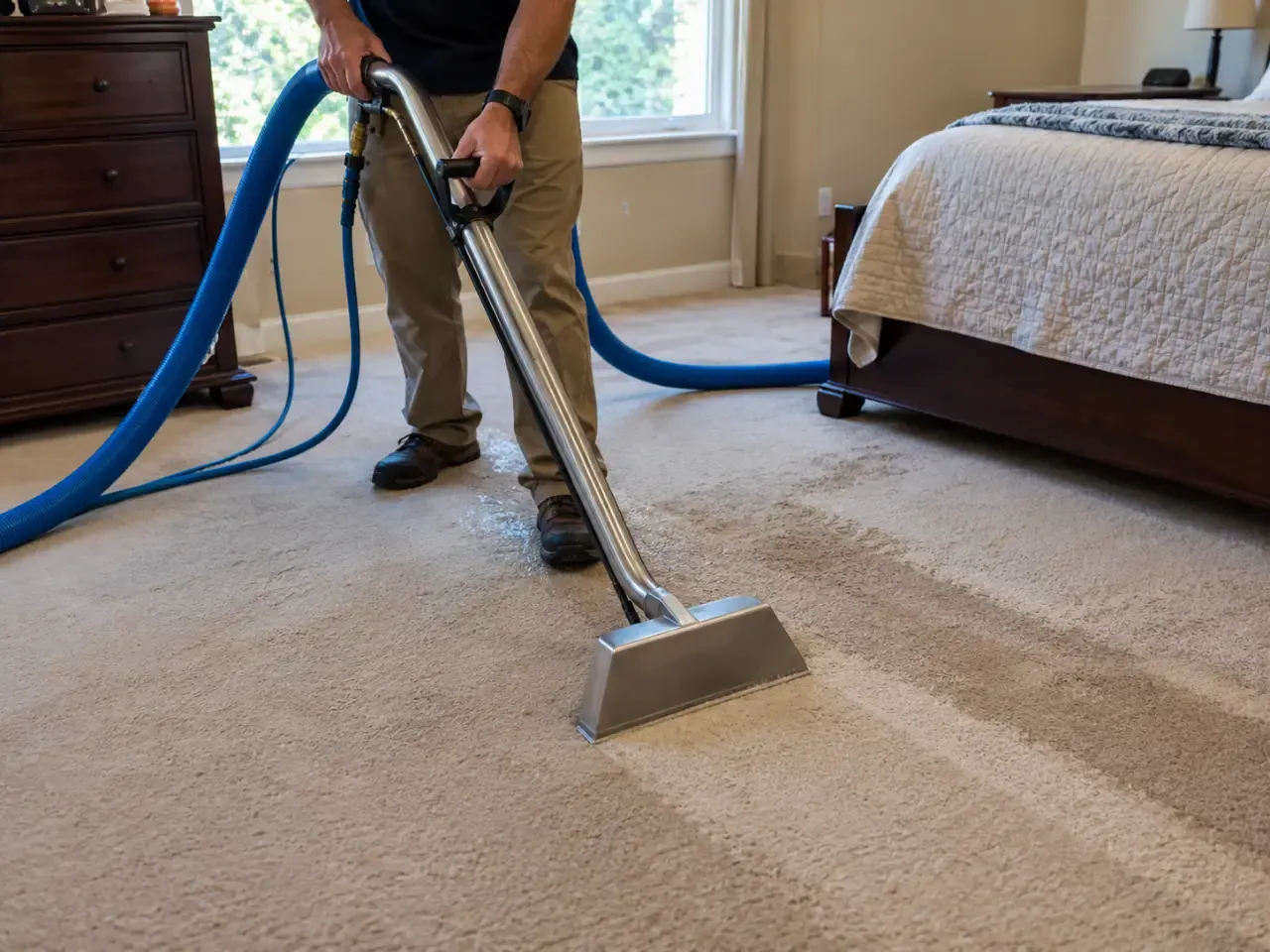
Water Damage Cleanup San Antonio TX starts the moment we pull up: extractors on the floor, moisture meters on the walls, and a plan to get your house dry. Whether it is a burst pipe in Stone Oak or a water heater leak in Alamo Ranch, we handle residential water cleanup in San Antonio, Texas from the first wet-vac pass to the final moisture reading. Call (210) 888-0085.
Service overview
What Water Damage Cleanup San Antonio TX Actually Involves
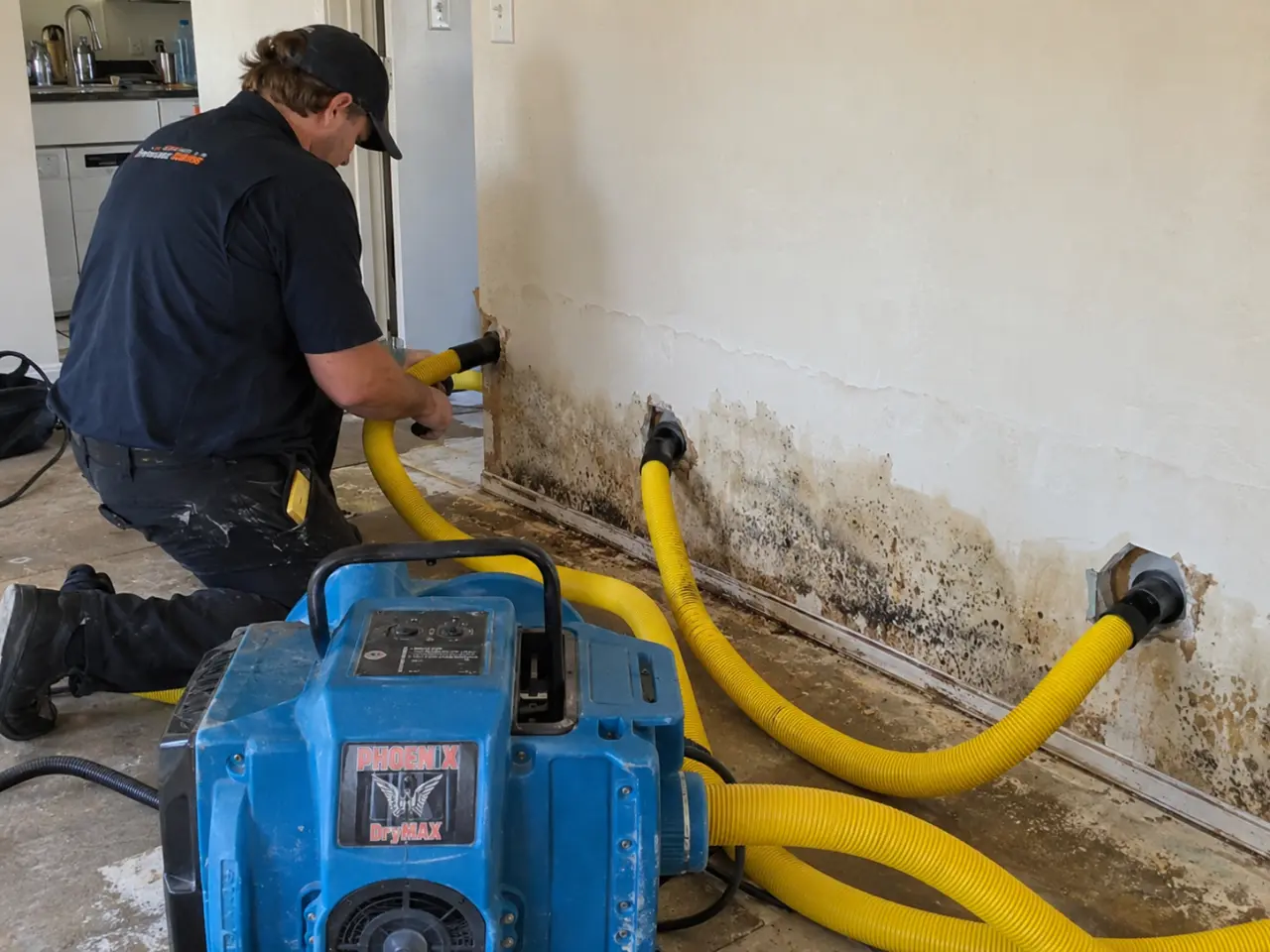
Water Damage Cleanup San Antonio TX is the process of removing standing water, extracting saturated materials, and drying the structure back to pre-loss moisture levels using meters and dehumidifiers. It is not just shop-vac work. We pull water out of carpet and pad, drill weep holes in baseboards, and set air movers and LGR dehumidifiers to dry the framing inside the wall cavity. Every job follows the ANSI/IICRC S500 Standard for Professional Water Damage Restoration, which tells us exactly how dry is dry enough.
San Antonio homes deal with slab leaks, burst pipes, and appliance supply-line leaks year-round. October through March brings the cold snaps that crack copper in uninsulated attics, and summer stormwater intrusion pushes water under doors in Southtown and Beacon Hill. If you are searching for water damage cleanup near me in San Antonio, the first 24 to 48 hours decide whether you are drying drywall or replacing it. We get there, stop the source, and start the clock on drying.
Practical benefits
Why San Antonio Homeowners Call Us First
Water spreads fast and mold does not wait. These are the outcomes our customers care about most when they call us after a leak, a storm, or a sewage backup.
Same-Day Water Extraction
We run portable water extractors and truck-mounted extraction units the same day you call. Standing water in a 12x14 room can be pulled in under an hour, which stops it from wicking into drywall and insulation. The faster the water is out, the less material we have to cut.
Drying Backed by Meters
We do not guess when a room is dry. Tramex and Protimeter moisture meters and thermal imaging cameras show us what is wet behind the wall. We log readings daily and keep air movers and dehumidifiers running until the numbers match a dry standard.
Odor and Contamination Control
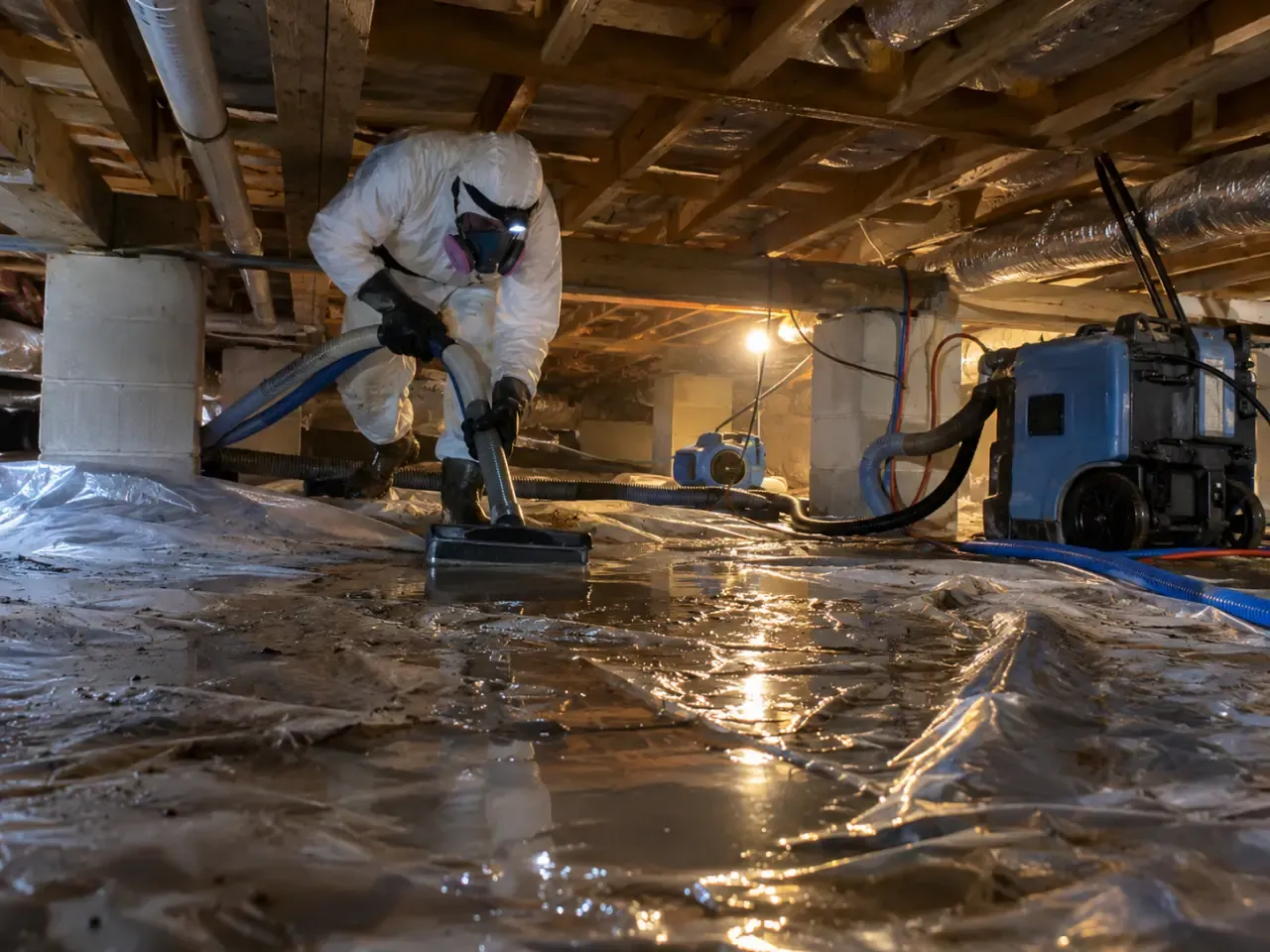
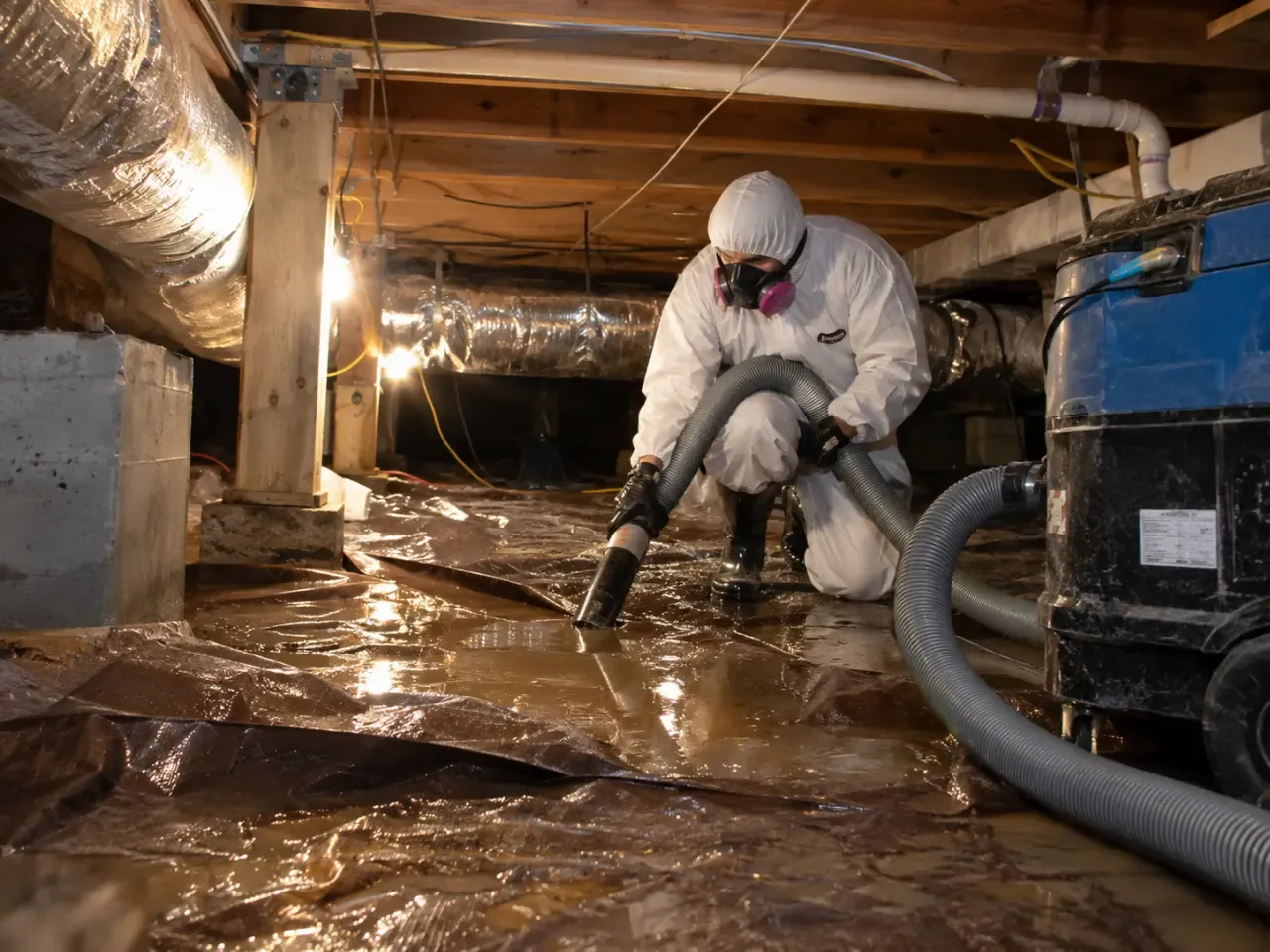
Sewage backups and stormwater intrusion leave bacteria behind. We apply antimicrobial cleaning products and disinfectants to affected surfaces, then run HEPA air scrubbers to pull spores and odor out of the air. That is how a flooded room cleaning service San Antonio customers trust gets the smell out for good.
Materials Saved, Not Replaced
Hardwood flooring, drywall, and carpet padding can often be dried in place instead of torn out. We use Injectidry panel systems and desiccant dehumidifiers to dry hard-to-reach assemblies. Saving materials keeps your repair bill down and gets you back in the room faster.
How service works
Our Water Damage Cleanup Process, Step by Step
Every job follows the same sequence, from the first phone call to the final moisture reading. Here is what you can expect when our crew shows up at your door.
STEP 01
Call and Triage
You call (210) 888-0085 and we ask the questions that matter: where is the water coming from, is it clean or contaminated, and how long has it been sitting. We walk you through shutting off the supply valve or breaker before we arrive. Same-day response across Bexar County.
Tools and methods
Tools and Methods We Use on Every Job
Portable water extractors
Pulled into tight spaces like closets, under cabinets, and upstairs bathrooms where a truck mount cannot reach. They get the standing water out fast so drying can start.
Truck-mounted extraction units
Used on large losses like flooded rooms and commercial spaces. They pull hundreds of gallons per hour and cut the extraction phase from hours to minutes.
LGR dehumidifiers (Dri-Eaz, Phoenix Restoration Equipment)
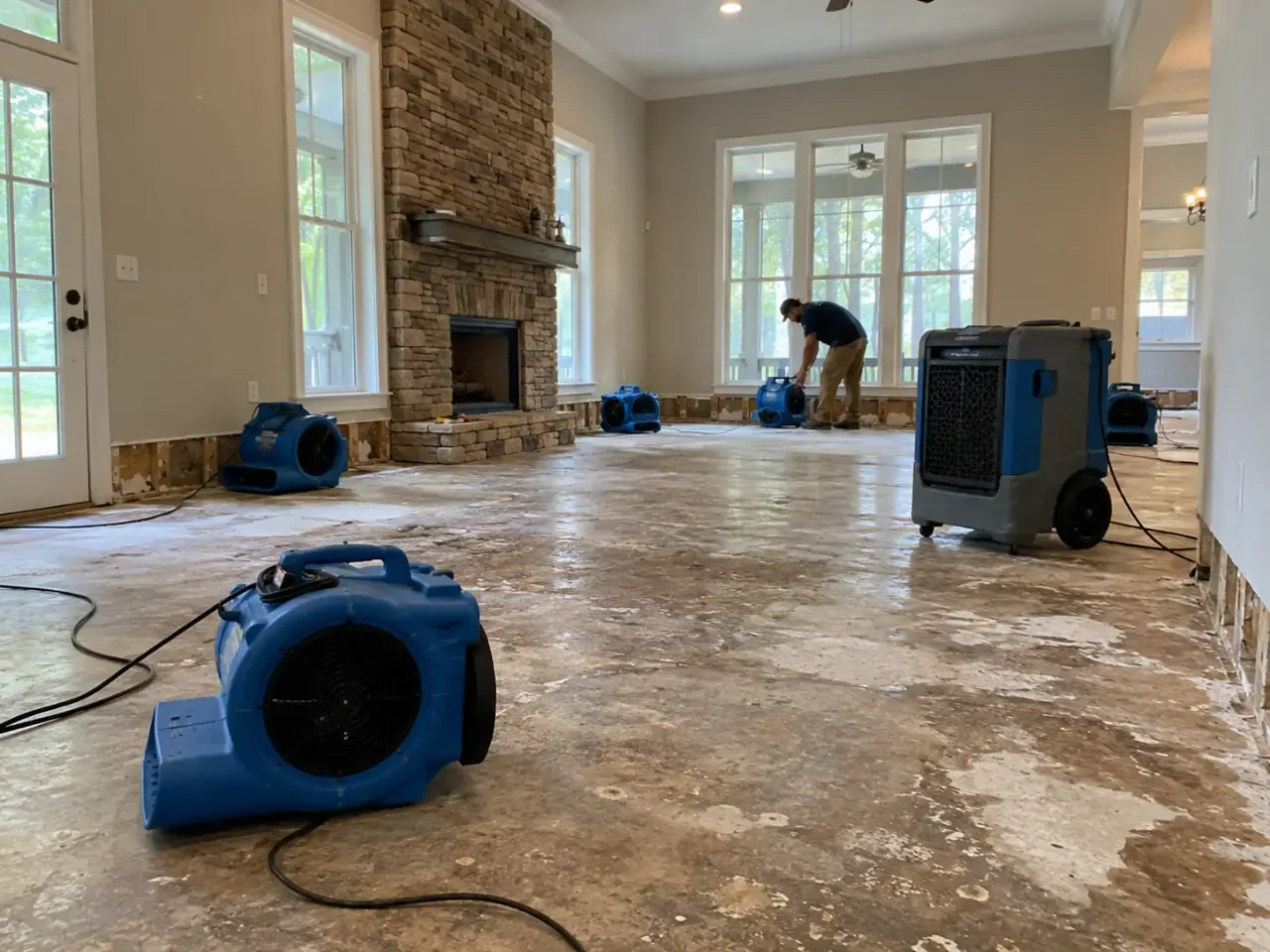
Low-grain refrigerant units pull moisture out of the air so wet materials can release their water. We run them 24/7 during the drying phase.
Desiccant dehumidifiers
Used on hard-to-dry assemblies like hardwood flooring and dense wall cavities. They pull moisture at lower temperatures than LGR units and work well in San Antonio's humid months.
Air movers (XPOWER, B-Air)
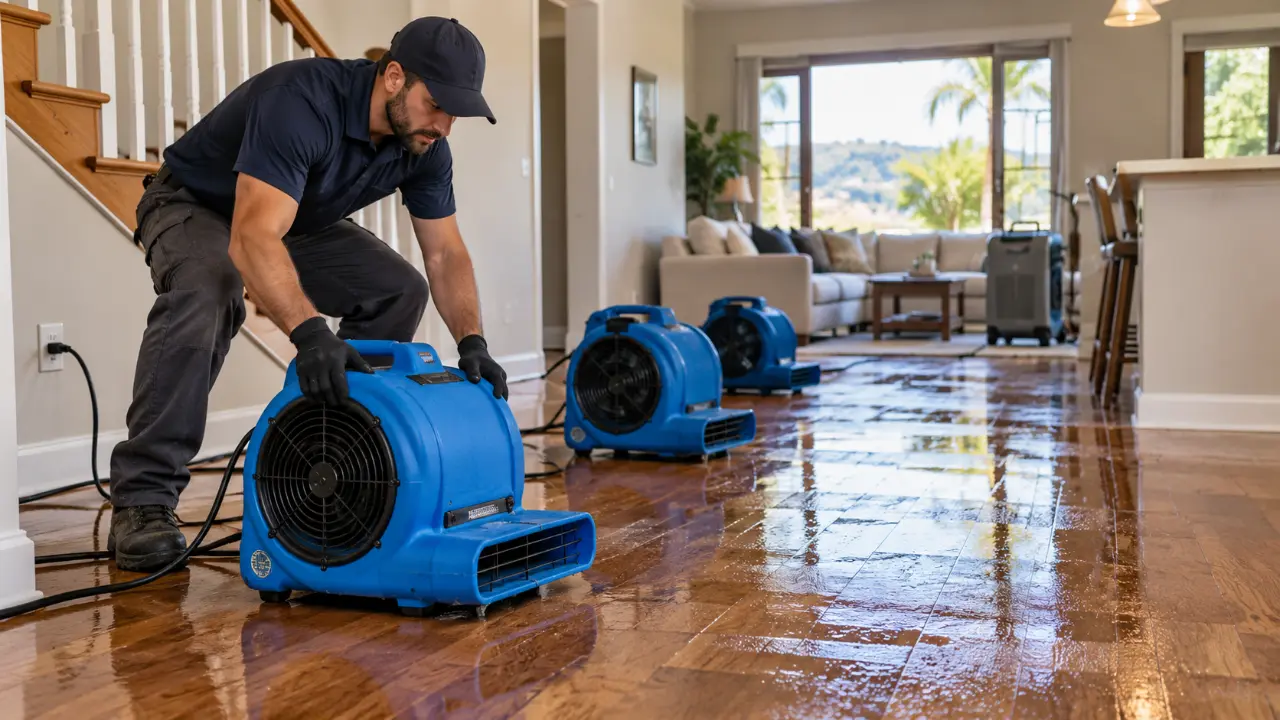
High-velocity fans that push air across wet surfaces to speed evaporation. We position them to create a circular airflow pattern in each room.
Moisture meters and thermal imaging cameras (Tramex, Protimeter)
These tell us where the water actually is, not where it looks wet. We use them to map the wet zone and to confirm the structure is dry at the end.
HEPA air scrubbers
Run during contaminated water jobs and mold remediation to pull spores, dust, and odor out of the air. They keep the rest of the house from getting cross-contaminated.
ANSI/IICRC S500 Standard for Professional Water Damage Restoration
This is the standard we follow on every water job. It tells us how to categorize the water, how to dry different materials, and when a structure is officially dry. Following it means our drying logs hold up with your insurance adjuster.
ANSI/IICRC S520 Standard for Professional Mold Remediation
When a water loss has gone past 48 hours and mold is present, we switch to S520. That means containment, negative air pressure, HEPA filtration, and removal of affected materials. It is a different job than drying clean water.
Injectidry panel drying
We use Injectidry panels to force dry air directly into wall cavities, cabinet bases, and subfloor assemblies. It dries hard-to-reach areas that air movers cannot reach, which saves drywall and hardwood from being torn out.
Containment with polyethylene vapor barriers
On contaminated or mold jobs, we seal off the work area with containment sheeting and polyethylene vapor barriers. This keeps dust and spores from spreading to clean rooms while we work.
Where this service fits
When San Antonio Homeowners Call Us
A water heater in the garage lets go the night before Thanksgiving and floods the hallway and two bedrooms.
We extract the standing water, pull the wet carpet and pad, and set air movers and an LGR dehumidifier. The drying takes four days. We document everything with moisture readings and photos for the insurance claim. The bedrooms are dry and the carpet is replaced before the holiday weekend ends. No mold, no lingering smell.
A February cold snap cracks a copper pipe in an uninsulated attic in Stone Oak and water runs down through the ceiling.
We cut out the saturated ceiling drywall, extract the water from the insulation and framing, and dry the attic and the room below. Containment keeps dust out of the rest of the house. The ceiling is dry and ready for repair in five days. The homeowner avoids a full ceiling replacement.
A storm drain backs up during a May downpour and pushes two inches of water under the back door of a Southtown home.
We treat it as a contaminated water loss. Extraction, removal of wet baseboards and pad, antimicrobial treatment, and HEPA scrubbing. Then we dry the slab and framing. The house is dry and disinfected in six days. The homeowner has a full report for the flood claim.
A dishwasher supply line leaks slowly behind the cabinets in a Medical Center townhome for two weeks before anyone notices.
We find the wet zone with thermal imaging, pull the toe kick, and dry the cabinet base and subfloor with Injectidry panels. Mold remediation runs alongside the drying. The cabinets are saved, the mold is removed, and the kitchen is back in use in a week.
Local execution
How Water Damage Cleanup Runs in San Antonio
San Antonio sits on clay soil that shifts with the weather, and that shifting is what cracks slab plumbing and supply lines under slab-on-grade homes. We see slab leaks in older neighborhoods like Beacon Hill and Southtown where the plumbing is original, and we see burst copper in Stone Oak and Encino Park when a February freeze hits. Summer stormwater intrusion is its own problem: a fast rain can push water under doors and through garage thresholds in Westover Hills and Great Northwest before you realize the drain is blocked. Our trucks carry portable water extractors, LGR dehumidifiers, and HEPA air scrubbers so we can start the same day, and we work to the ANSI/IICRC S500 Standard on every job. If you need same-day cleanup after a home water leak in San Antonio, call (210) 888-0085. We serve ZIP codes 78112, 78239, and 78252 along with the rest of Bexar County.
Stone Oak
Larger two-story homes with upstairs bathrooms and laundry rooms. Supply-line leaks upstairs run down into the ceiling below, so we check both floors with thermal imaging before we set equipment.
Alamo Ranch
Newer construction with PEX plumbing and tankless water heaters. When a fitting fails, the water is usually clean but it spreads fast across open floor plans. We extract and dry the same day.
Southtown
Older homes with original cast iron and galvanized plumbing. Slab leaks and sewer backups are common here, and we treat those as contaminated losses with full antimicrobial treatment.
Medical Center
A mix of townhomes and mid-rise condos. Water from an upstairs unit can affect the unit below, so we coordinate with property management and document both sides of the loss.
Clay soil movement that cracks slab plumbing
Slab leaks push water up through the floor and into wall cavities. The damage is often hidden until the floor feels warm or the water bill spikes. We use thermal imaging to find the wet zone before we cut.
February freezes that burst attic and exterior pipes
Uninsulated copper in attics and exterior walls cracks when temperatures drop below freezing. Water runs down through ceilings and insulation, which means the drying zone is bigger than it looks.
Summer stormwater intrusion through doors and garages
Fast, heavy rain overwhelms drains and pushes water into homes. That water is contaminated, so we treat it as a Category 3 loss with antimicrobial treatment and HEPA scrubbing, not just extraction.
High humidity that slows drying
San Antonio humidity means open-window drying does not work. We run LGR and desiccant dehumidifiers to pull moisture out of the air so wet materials can actually release their water.
Problems we solve
Problems We Solve With Water Damage Cleanup
Water damage is not one problem, it is five or six problems stacked on top of each other. Here are the ones we see most often in San Antonio and how we handle them.
Wet carpet and padding that will not dry
We extract the carpet, pull the pad, and dry the subfloor with air movers. If the carpet can be saved, we dry it in place and reinstall new pad underneath. If not, we remove it and document it for your claim. Carpet padding acts like a sponge and holds water against the subfloor. If it stays wet more than 48 hours, mold starts and the pad has to be replaced anyway.
Moisture trapped behind walls after a slab leak
We use thermal imaging cameras and Protimeter moisture meters to find the wet zone. Then we drill weep holes at the baseboard and set Injectidry panels or air movers to dry the cavity from the inside out. Slab leaks push water up through the floor and into the wall cavity. The drywall looks fine on the outside while the insulation and framing stay wet for weeks.
Sewage backup that leaves odor and bacteria
Our AMRT-trained techs remove the contaminated material, apply disinfectants and antimicrobial cleaning products, and run HEPA air scrubbers. We do not stop until the air and surfaces test clean. Sewage is a Category 3 loss. The bacteria and odor will not go away with a shop-vac and a fan. If it is not treated properly, the smell comes back and the space is not safe to use.
Secondary mold growth after a slow leak
We treat it as a combined water and mold job. Containment goes up, HEPA filtration runs, and affected materials come out to the ANSI/IICRC S520 Standard. Then we dry the structure and verify with meters. A slow supply-line leak behind a refrigerator can run for weeks before you notice. By then, mold is already growing on the drywall and framing in the dark.
A practical standard for every visit.
Clear planningPrepared arrivalsCareful workLocal follow-through
Experience in the details
Six Years of Water Damage Cleanup in San Antonio
San Antonio Water Shield has been drying out San Antonio homes since 2020. In six years we have handled everything from a slow supply-line leak behind a refrigerator to a two-story flood after a storm drain backed up. Our technicians hold IICRC Water Damage Restoration Technician (WRT) and Applied Structural Drying (ASD) certifications, and we work to the ANSI/IICRC S500 Standard on every job. We are an IICRC Certified Firm, which means our paperwork, our drying logs, and our methods hold up when your insurance company looks at them.
- IICRC Water Damage Restoration Technician (WRT) and Applied Structural Drying (ASD) certified crew
- IICRC Certified Firm with documented drying logs for every job
- Applied Microbial Remediation Technician (AMRT) training for sewage and contaminated water losses
- EPA Lead Renovation, Repair and Painting (RRP) certification for pre-1978 San Antonio housing stock
- OSHA hazard communication and respiratory protection training on every technician
Where we work
One local team. A lot of ground covered.
Water damage cleanup in San Antonio includes water extraction, removal of unsalvageable materials, structural drying with air movers and dehumidifiers, antimicrobial treatment, and a final moisture check. We also document everything for your insurance claim. Most jobs run two to five days of drying depending on how deep the water got into the walls and floors.
You should arrange cleanup within 24 to 48 hours of discovering a leak. Mold can start growing on wet drywall in as little as 48 hours in San Antonio's humidity. If you call us the same day, we can often save drywall and carpet padding that would otherwise be torn out. Waiting a week usually means a bigger repair bill.
Yes. We remove odors and contaminated water with antimicrobial cleaning products, disinfectants, and HEPA air scrubbers. Sewage backups and stormwater intrusion are Category 3 losses, which means the water carries bacteria. We treat those jobs differently than a clean supply-line leak, and we do not stop until the air and surfaces test clean.
Yes, drying is the core of the job. Extraction gets the standing water out, but drying gets the moisture out of the framing, drywall, and subfloor. We set air movers, LGR dehumidifiers, and sometimes desiccant dehumidifiers, then check moisture readings daily until the structure hits dry standard. Extraction without drying just leaves a wet house.
Keep exploring
Other Services That Pair With Water Damage Cleanup
Your next step is waiting
Get Water Damage Cleanup San Antonio TX Started Now
Water spreads while you wait. Call (210) 888-0085 and we will dispatch a certified crew to your door the same day. We are licensed, insured, and IICRC Certified, and we document every job for your insurance claim. One call and the drying starts.
Start with the basics
Contact San Antonio Water Shield
Call (210) 888-0085 any time, day or night. We answer live, 24/7, and dispatch a crew to your San Antonio address, usually within the hour. If you prefer email, send photos and your address to info@sanantoniowatershield.com and we will call you back with next steps.